
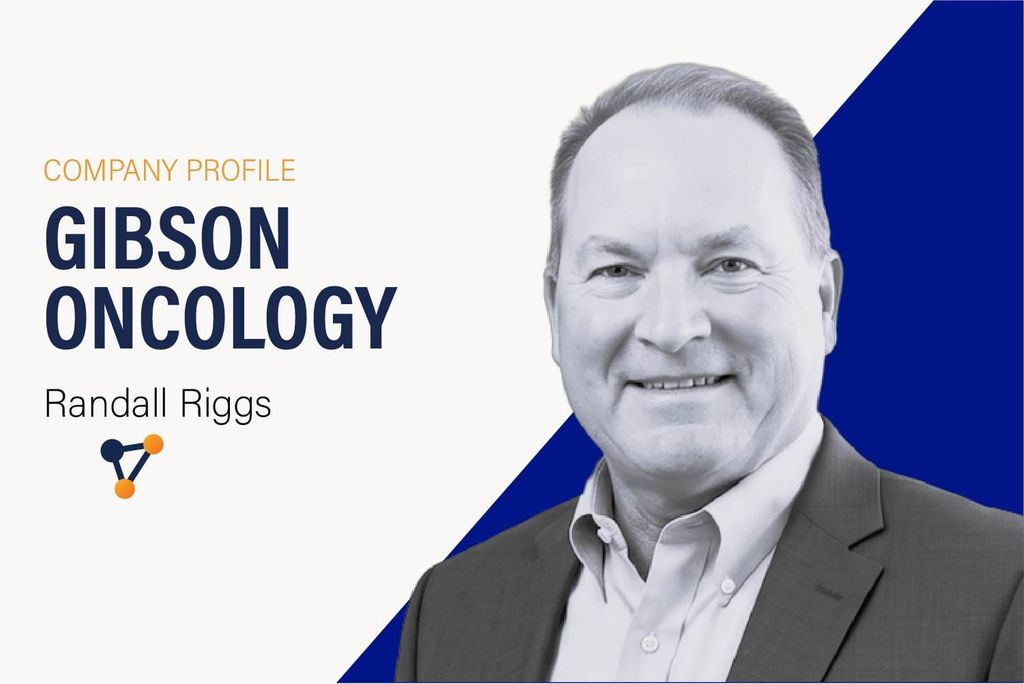
A conversation with Gibson Oncology President and CEO Randall B. Riggs
Glioblastoma is the most common and most aggressive primary brain tumor in adults. Roughly 13,000 Americans are diagnosed each year, median survival runs 15 to 18 months, and fewer than one in ten patients are alive at five years. For those whose disease returns, there is no established standard of care.
Part of the reason is access. The blood-brain barrier protects the brain from circulating toxins, and in doing so it also excludes most systemic cancer therapies. Efflux transporters pump out much of what does get through.
Gibson Oncology did not set out to solve that problem, but discovered that its lead compound, LMP744, already had. The molecule had been designed for something else entirely: to hit two cancer targets at once. The brain penetration proved to be a property it carried all along, and it is why a compound first characterized years ago is now being studied in a Phase II trial at the National Institutes of Health.
The Pharmacology Behind the Model
LMP744 is a dual-acting indenoisoquinoline. It inhibits topoisomerase 1 (TOPO1) and reduces overexpression of cMyc, an oncogene implicated in roughly 80 percent of human tumors and long considered undruggable because of the shallow binding pockets on the Myc protein. Gibson’s compounds work around that by stabilizing a G-quadruplex structure in the cMyc promoter, suppressing transcription of the gene rather than attacking the protein directly.
The brain pharmacology came into focus separately. In preclinical studies, LMP744 crossed the blood-brain barrier and reached brain concentrations approximately ten times the level required to kill cancer cells, with a half-life in the brain exceeding 24 hours per dose. It is also not readily removed by the efflux transporters that blunt other agents.
Randall B. Riggs, Gibson Oncology’s President and Chief Executive Officer, is deliberate about how that property is described.
“What changed for us was the pharmacology,” Mr. Riggs says. “These compounds cross the blood-brain barrier at high concentration and remain in the brain. That is a property of the molecules themselves, not a delivery platform built around them.”
The distinction carries commercial weight. A delivery technology has to be validated again for each payload it carries. A compound that crosses on its own carries the property with it into every indication it enters.
From Five Molecules to a Portfolio
Gibson holds worldwide exclusive rights to a group of small molecules discovered at the National Cancer Institute and Purdue University. Five have already been studied in patients with recurrent solid tumors and lymphomas, in trials supported by the NCI. That history is unusual for a company of Gibson’s size: the early human safety work was completed before the assets arrived.
LMP744 leads. LMP400, a closely related compound with greater resistance to drug efflux, is being evaluated at Duke University against high-grade astrocytomas resistant to current standard of care therapy. In several patient-derived xenograft models with Grade 3 and Grade 4 astrocytomas not responsive to those regimens, LMP400 has produced tumor regression.
Behind both of these programs sits a second generation. Gibson licensed 56 rationally designed 7-Azaindenoisoquinolines, known as the Azas, from Purdue and the NCI on a worldwide exclusive basis. They were discovered by Purdue medicinal chemist Dr. Mark Cushman and share the dual TOPO1 and cMyc activity of the earlier compounds. Composition-of-matter and method-of-use claims run to at least 2037. Since acquiring those rights, Gibson has synthesized and characterized a further 700 Aza compounds with improved targeting of cMyc and TOPO1, oral bioavailability and better pharmacokinetics.
The company holds Orphan Drug Designation for all gliomas, including DIPG, and Rare Pediatric Disease Designation for Ewing sarcoma.
Starting with Recurrent Glioblastoma
Recurrent glioblastoma is where the thesis gets its first clinical test. The Phase II study of LMP744 is being conducted by investigators at the National Institute of Neurological Disorders and Stroke, part of the NIH, and evaluates the compound as a single agent. Gibson provides partial funding and drug product under a Clinical Cooperative Research and Development Agreement.
On August 11, 2026, the company announced that the first patient had been enrolled and had completed the initial treatment cycle without complication. It is an early marker rather than an efficacy signal, but it establishes that the trial is running.
The structure is as notable as the science. A government institute is conducting the study, which keeps Gibson’s cost of generating clinical data well below what a company-sponsored trial in the same indication would require. For a private company advancing several assets at once, that arithmetic shapes what is possible.
“We are a small company working in a disease that has defeated much larger ones,” Mr. Riggs says. “Partnering with the NIH lets us put a compound in front of patients who need viable options now, and it lets us keep developing the rest of the portfolio at the same time.”
Looking Ahead
Gibson operates under the mission “Tough on cancer. Not on patients,” a reference to the tolerability profile it attributes to the indenoisoquinoline class relative to older topoisomerase inhibitors. Whether that holds in a larger recurrent glioblastoma population is among the questions the NINDS study will begin to answer.
The near-term markers are straightforward: continued enrollment and readouts on efficacy and safety in the Phase II trial, progress in the LMP400 work at Duke, and movement of the Aza series toward the clinic. Each of the three draws on the same underlying chemistry, and each would extend the reach of a finding that began as an observation about how these molecules behave in the brain. The same chemistry may also have utility beyond the brain, in the many cancers driven by the cMyc oncogene.